Welcome to Global Tech Insights. We are living in the ‘Age of AI’. Since the advent of ChatGPT, the world has plunged into a race for artificial intelligence development, and at the center of this storm lies the 2026 AI Semiconductor War.
With NVIDIA’s stock price soaring to unprecedented heights and Samsung Electronics and SK Hynix fiercely competing for HBM (High Bandwidth Memory) supremacy, who will emerge as the ultimate victor in 2026? In this post, we provide an in-depth analysis of the global AI semiconductor market flow and highlight the key technical observation points that every investor must know.
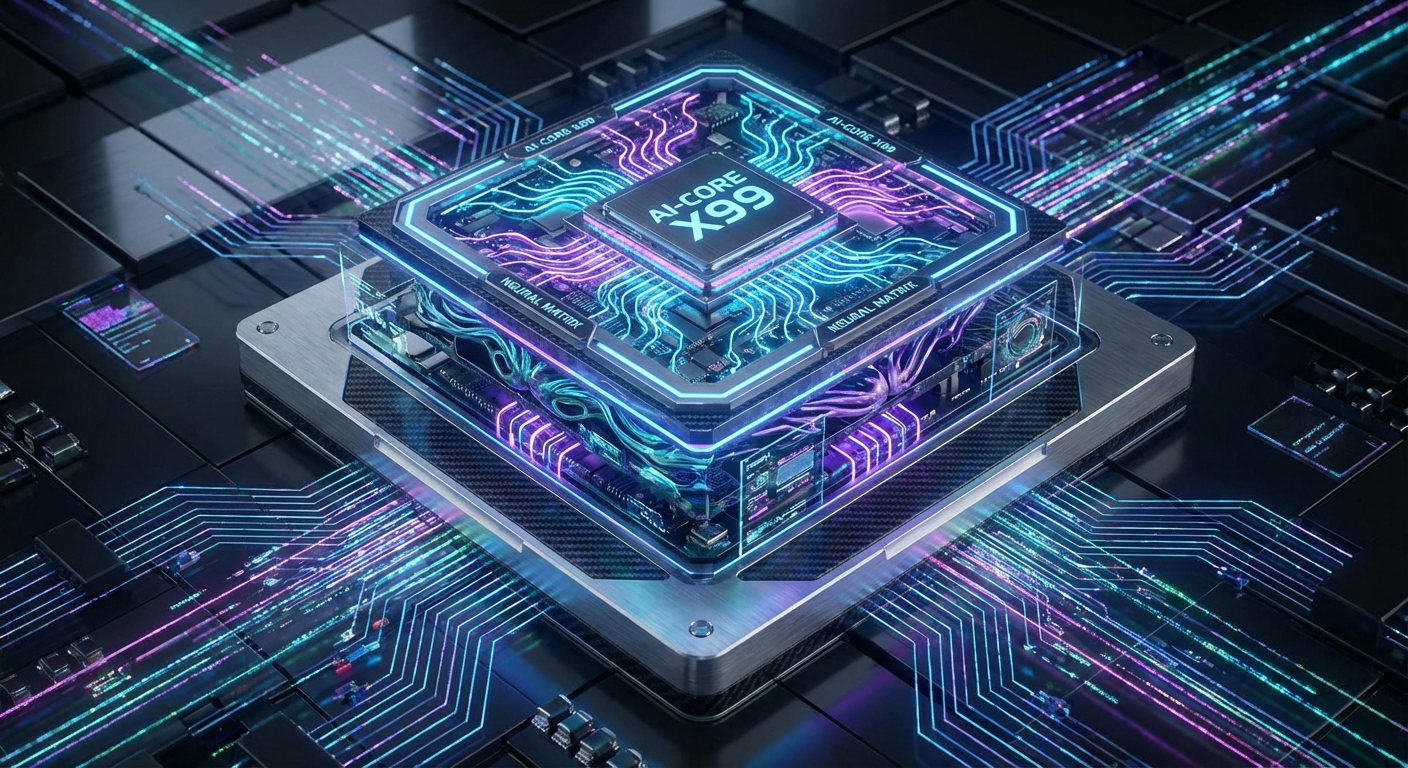
1. NVIDIA: Can the King Retain the Throne?
Currently controlling over 80% of the AI accelerator market, NVIDIA is the undisputed king. Their GPUs (H100, B100, etc.) are considered irreplaceable resources for AI model training. NVIDIA’s strength stems not only from hardware performance but also from the robust ‘CUDA’ software ecosystem that locks in developers.
However, the landscape in 2026 might look different. Big Tech giants like Google (TPU), Amazon (Trainium), and Microsoft (Maia) are pouring astronomical sums into developing their own custom chips (ASICs) to break free from NVIDIA’s grip. Additionally, traditional powerhouses like AMD and Intel are tightening the race with next-gen chips. 2026 will be the watershed moment determining whether NVIDIA’s monopoly cracks or its ‘super-gap’ widens.
2. The Memory War: Samsung Electronics vs SK Hynix
The key partner maximizing AI semiconductor performance is memory. Specifically, HBM (High Bandwidth Memory), which stacks DRAM vertically to boost data speed, is in such high demand that supply cannot keep up. currently, the winner is undoubtedly SK Hynix. It has been recognized for its technology by exclusively supplying HBM3 to NVIDIA, and its stock price is rallying.
However, the counterattack from the ‘Semiconductor Giant’ Samsung Electronics is formidable. Samsung possesses the world’s only ‘Turn-key’ solution capable of handling memory, foundry (chip manufacturing), and packaging all at once. As process miniaturization and packaging technology become more critical in the next-gen HBM4 market, Samsung has a fair chance to flip the board with its massive capital and technological prowess. The fierce competition between these two Korean titans leading up to 2026 will capture the attention of global investors.

3. 2026 Market Outlook & Investment Strategy
According to global research firm Gartner, the worldwide AI semiconductor market is projected to explode more than twofold, growing from approximately $53 billion in 2023 to $119.4 billion by 2027. This signifies not just a trend, but a structural shift across industries.
Investors must note that individual stock prices can be highly volatile depending on the success of technological developments. Therefore, rather than going ‘all-in’ on a single stock, it is safer to invest in ETFs or funds that cover the entire 2026 AI Semiconductor War ecosystem (design, memory, equipment, packaging). For real-time global market data, referring to sites like Yahoo Finance is recommended.
Conclusion
The AI semiconductor war has only just begun. The pace of technological advancement is so rapid that today’s leader could be tomorrow’s runner-up in this ruthless battlefield. However, one thing is certain: the 2026 AI Semiconductor War industry will be a core engine driving the global economy for the next decade. We hope Korean companies seize the initiative in this massive wave, and we wish investors success through continuous interest and study.
Related Posts (Korean)
Interested in investing in future industries like AI semiconductors? Check out safe investment methods supported by government policies.
What is HBM?
HBM (High Bandwidth Memory) involves stacking multiple DRAMs vertically to significantly boost data processing speeds. It is an essential component for AI accelerators.
Will NVIDIA’s monopoly continue?
NVIDIA’s dominance in the AI ecosystem is expected to persist for now. However, competition will intensify as AMD, Intel, and Big Tech companies develop their own proprietary chips.
Who has the edge: Samsung or SK Hynix?
Currently, SK Hynix leads the HBM market, but Samsung Electronics boasts undeniable competitiveness with its turn-key capabilities (Memory + Foundry + Packaging) and massive capital.
When is the right time to invest in AI chip stocks?
Given the high volatility of technology stocks, a long-term approach is recommended. Diversified investment through Semiconductor ETFs or funds is safer than betting on individual stocks.
What is the market outlook for 2026?
According to Gartner, the global AI semiconductor market is projected to more than double its current size by 2026, signaling massive growth.