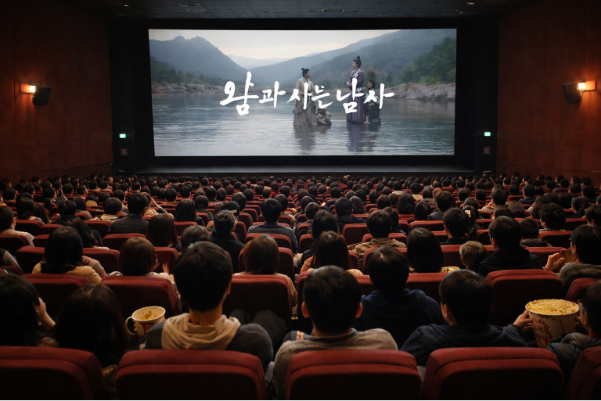
Have you all heard the news that The Man Living with the King has surpassed 4 million viewers and is heating up the box office? What exactly is the charm of The Man Living with the King that has captured the hearts of so many audiences? Today, let’s dig into the reasons behind the film’s box-office success along with the many stories hidden within it. Behind the successful run of The Man Living with the King are a solid storyline, appealing characters, and outstanding performances by the cast. Shall we take a closer look together?
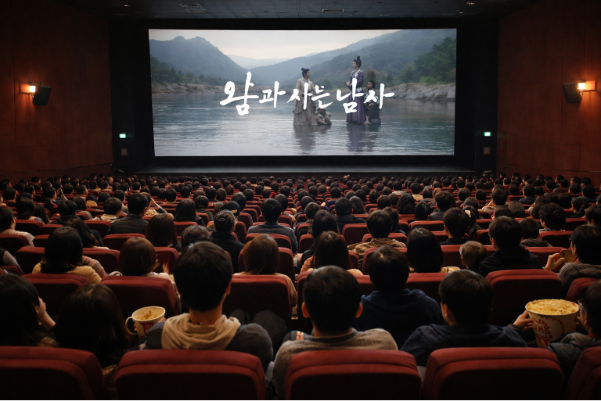
Film Overview and Plot
The Man Living with the King is a comedy film set in the Joseon Dynasty, depicting events that unfold when someone impersonates the king. The story follows King “Lee Won,” who appears dignified on the outside but is quite clumsy at heart, and “Deoksu,” a commoner who happens to look exactly like the king.
The film begins when Deoksu, falsely accused of a crime, is on the run and accidentally encounters King Lee Won. To escape political enemies seeking his life, Lee Won proposes that Deoksu act as his royal double. Suddenly thrust into palace life, Deoksu struggles to adapt to strict court etiquette and constant political intrigue, creating a series of unpredictable and humorous situations.
However, as Deoksu gradually immerses himself in the role of king, he begins to show the qualities of a true leader who cares for the people. He listens to the grievances of wronged citizens, stands up against unjust authority, and accomplishes things he never imagined possible. Will Deoksu safely complete his role as the king’s substitute and return to his own life? And what changes will Lee Won undergo through Deoksu? You’ll find the answers when you watch the film!
Box Office Performance and Analysis
The fact that The Man Living with the King has surpassed 4 million viewers is truly an impressive achievement! What exactly drew audiences to this film?
First of all, the movie blends romance, comedy, and a touch of fantasy, and this hybrid genre seems to have significantly contributed to its success. Modern audiences tend to prefer films that offer diverse forms of entertainment rather than being confined to a single genre. In particular, the combination of laughter and romance appears to have appealed strongly to female viewers.
In addition, the solid storyline and engaging characters cannot be overlooked. The premise of a romance that transcends social class between a king and an ordinary woman is inherently intriguing. Combined with strong on-screen chemistry between the actors, the film’s immersion level is heightened. The performers’ acting skills and deep understanding of their characters allowed audiences to emotionally connect with the story.
Furthermore, positive word of mouth played a major role in the film’s success. As favorable reviews spread through social media and online communities, curiosity grew among those who had not yet seen it. The perception that it is a great movie to watch with friends or a partner likely contributed to its steady increase in audience numbers. It will be exciting to see how many more viewers The Man Living with the King can attract in the future!
Director and Casting Behind the Scenes
Director Jang Hang-jun reportedly put great effort into casting for The Man Living with the King. He carefully selected each actor to ensure the film’s tone and message would be effectively conveyed. One particularly interesting story concerns the casting of the actor who played King Danjong. The director was deeply impressed by the actor’s delicate performance in a television drama and decided to cast him, believing he could perfectly portray the fragile and tragic image of the young king.
The casting of the actor for the role of Han Myeong-hoe was also a notable choice. Director Jang wanted the actor to present a new side of himself, moving away from his previously intense image. Historically, Han Myeong-hoe was somewhat different from the typical image of a treacherous court official. He was known to have a strong physique and handsome appearance. By emphasizing these aspects, the director aimed to create a more multidimensional portrayal of the character.
Ultimately, Director Jang’s casting strategy played a significant role in the film’s success. The actors’ outstanding performances and their perfect alignment with their characters allowed audiences to become more deeply immersed in the story. Knowing these casting behind-the-scenes details can make the actors’ performances feel even more meaningful when watching the film.
Analysis of the Actors’ Performances
The acting performances in The Man Living with the King have received widespread praise. Each actor’s deep immersion into their character was especially impressive. The actor who played King Danjong reportedly lost 15 kilograms to portray the “prepared ruler,” expressing the loneliness and desperation of a dethroned king. Such dedication is truly remarkable.
The actor who played Eom Heung-do served as an emotional bridge that allowed audiences to become more deeply engaged with the film. Many viewers reportedly laughed and cried along with his performance. Meanwhile, the actor portraying Han Myeong-hoe delivered overwhelming charisma that heightened the tension of the story, dominating the atmosphere whenever he appeared.
The actor who played Mae-hwa presented a delicate emotional performance, portraying a character who maintains warmth and humanity even amid tragedy. By perfectly expressing sorrow while preserving hope, the performance left a lasting impression on audiences. Altogether, the actors’ exceptional performances significantly enhanced the film’s immersion and contributed greatly to its box-office success.
Themes and Meaning of the Film
Why has The Man Living with the King received so much love? It is not simply because it is a funny comedy. The film contains deeper themes that invite reflection.
One of the most prominent themes is the question of “true happiness.” The clown Ha-seon, acting as King Lee Heon’s double, lives far from power but finds genuine happiness by communicating with the people and empathizing with their hardships. In contrast, King Lee Heon possesses power but lives in constant anxiety and loneliness. The film asks: who truly lived a happier life? Through this question, it encourages audiences to reconsider the meaning of happiness.
Another key theme is the importance of communication. Ha-seon listens carefully to the voices of the people and strives to understand their suffering. His sincere communication opens the once-closed palace and narrows the gap between ruler and citizens. The film prompts reflection on how communication should occur in society and why it matters.
Ultimately, The Man Living with the King is a film that delivers messages about true happiness and meaningful communication through laughter and emotion. Its success likely stems from offering not only entertainment but also profound reflections on life.

Space and Symbolism in the Film
In The Man Living with the King, space is more than just a background setting. Cheongnyeongpo in Yeongwol, Gangwon Province, historically known as a place of sorrow, is portrayed differently in the film. While it was once a place of confinement, the movie presents it as a space where one can escape political pressure and experience human freedom—a refuge where even a king can rest like an ordinary person.
Do you remember the scene where the king and the people share a meal? Although unimaginable in the real Joseon era, the film uses this “communal dining table” to depict human connection that transcends social class. Filming did not take place in Cheongnyeongpo itself but on a set constructed in the nearby Seondol Village, carefully designed to recreate nature from 500 years ago. This spatial design enhances audience immersion and deepens the emotional connection between ruler and people. In this way, space in the film serves as an important element that conveys the director’s intended message.
Analysis and Outlook for the Korean Film Industry
The success of The Man Living with the King appears to offer a ray of hope for the struggling Korean film industry. Despite reports that 2025 theater attendance remained at half of pre-pandemic levels, the film’s success carries significant implications. It prompts a reconsideration of survival strategies for the industry as a whole.
The film’s success suggests a return to fundamentals. Rather than relying solely on star power or massive production budgets, films with strong scripts and clear genre appeal can still win audience support. It serves as a reminder of the enduring power of well-made cinema.
Moving forward, the Korean film industry may need a strategy of “selection and concentration.” Instead of investing heavily in every project, focusing resources on promising works and enhancing their quality may be the key to survival. It signals a shift toward competing through the strength of the work itself rather than through inflated star systems. The success of The Man Living with the King demonstrates this possibility, and it will be fascinating to see how Korean cinema evolves.
Conclusion
The milestone of 4 million viewers for The Man Living with the King represents more than a box-office achievement—it carries meaningful implications for the Korean film industry. Its solid storytelling, powerful performances, and meaningful themes resonated deeply with audiences. By prompting reflection on true happiness and communication, the film offers both entertainment and insight, while hinting at a promising future for Korean cinema. One hopes that more films like The Man Living with the King will continue to revitalize the industry and bring renewed energy to theaters.
Related Links (Korean Version)
https://oktomom.co.kr/wp-admin/post.php?post=996&action=edit
Who are the lead actors of The Man Living with the King?
Information about the lead actors of The Man Living with the King can be found in the main text.
Why was The Man Living with the King a box-office success?
The Man Living with the King offers enjoyment across various genres such as romance, comedy, and fantasy, and the actors’ outstanding performances along with positive word of mouth contributed to its box-office success.
What significance does Cheongnyeongpo hold in the film?
In the film, Cheongnyeongpo is portrayed as a space where one can escape political pressure and experience human freedom.
What significance does The Man Living with the King hold for the Korean film industry?
The box-office success of The Man Living with the King demonstrates that films with solid screenplays and strong genre appeal can resonate with audiences, delivering the message that the Korean film industry needs to return to its fundamentals.
What themes does The Man Living with the King explore?
The Man Living with the King conveys messages about true happiness and the importance of communication.